Community Solar
Turn Your Property into a Revenue-Generating Asset
Host a community solar project and turn unused space into steady income — earning on average $80,000 per year and $1.6 million over its lifetime. You’ll strengthen your bottom line and help your community access affordable, clean power.
What is Community solar?
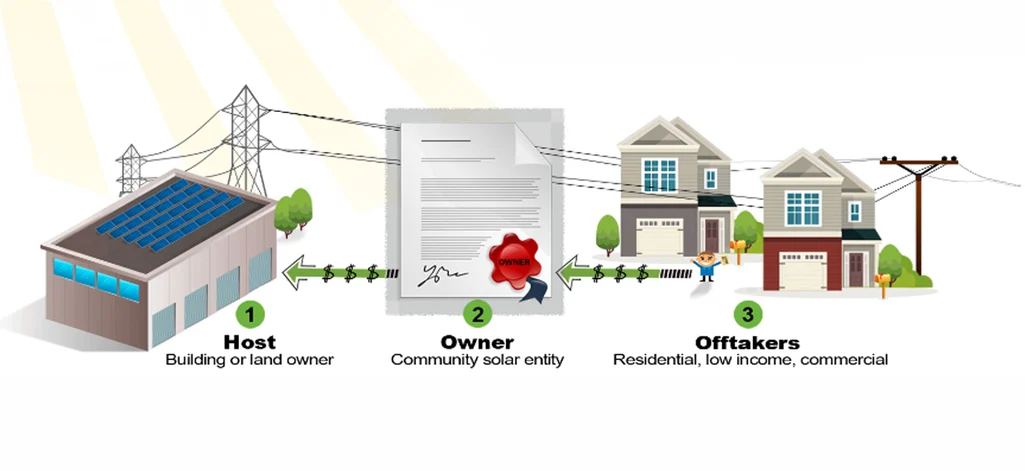
Community solar makes renewable power accessible for everyone. A single solar project can provide clean electricity to many homes and businesses, allowing participants to benefit without installing panels on their own buildings.
As the property host, you earn reliable lease income while subscribers enjoy lower-cost clean power. It’s a win for you, your community, and the planet.

Who's Eligible for Community Solar?
Community solar is ideal for property owners with unused roof, land, or parking areas that aren’t needed for their own energy use. If your property has space to spare, you could be earning a steady income while supporting clean energy for your community.
Great candidates include:
- Large Buildings Properties with large rooftops can lease space for solar panels.
- Leasing Companies Property owners who lease out buildings can generate new revenue streams by utilizing their roof space.
- Businesses with Parking Areas Solar carports generate income while still allowing full use of parking spaces.
- Schools & Municipalities Even without a budget for their own solar system, they can host a system to benefit the community.

Benefits of Community Solar
- New Revenue Stream: Generate predictable, long-term lease income.
- Zero Upfront Costs: Development, financing, and construction are all handled for you.
- Boost Property Value: Enhance sustainability credentials and market appeal.
- Community Impact: Provide residents and local businesses (including your own) with affordable clean power.
- Futureproofing: Support the clean energy transition while protecting against rising costs.
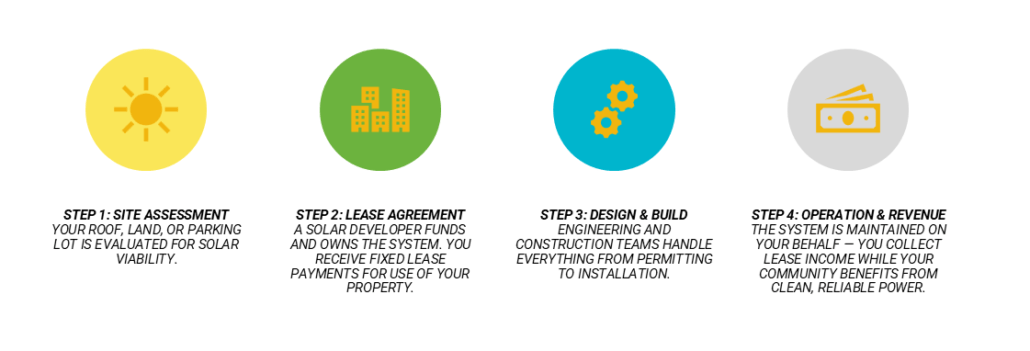
How hosting community solar works

Why Partner with US?
Hosting community solar is a smart opportunity — best handled by an experienced, turnkey provider. With Pfister, you get a partner who manages every step and ensures your property generates steady income with zero hassle.
- Proven Experience: Over 20 years in the industry and 900+ MW of clean energy installed, we bring the track record you can trust.
- Full-Service Delivery: From development and financing to design, construction, and long-term operations, Pfister manages the entire process from start to finish.
- In-House Expertise: Our own engineering and construction teams ensure quality, speed, and accountability at every step.
Proven Results


Ready to unlock new revenue with community solar? Schedule a consultation today!
Community Solar Frequently Asked Questions
No. Hosting a community solar project requires zero upfront investment. The system is financed and owned by the developer — you simply earn lease income to allow the system to be installed on your property.
Lease terms typically range from 15 to 25 years, depending on the project. Long-term agreements ensure predictable income for property owners and long-term energy savings for subscribers.
The project developer is responsible for all operations, monitoring, and maintenance. You don’t need to worry about upkeep, performance, or subscriber management.
Rooftops, parking lots, and land parcels can all host community solar. A quick site assessment determines viability based on space, structural condition, and grid interconnection.
It depends on property size, system capacity, and local program incentives. On average, with every 100,000 square feet of rooftop, community solar can deliver up to $80,000 in annual revenue. During your consultation, we’ll provide a custom revenue estimate based on your property.
Subscribers — typically local businesses, residents, or community members — purchase clean power at a discounted rate compared to utility prices.
No. As a host, you provide the space for the solar system, but continue to buy electricity as usual. If you’re also interested in on-site solar for your own energy needs, we can explore that as well.